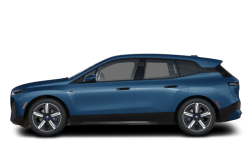
2026 BMW X1 vs 2026 Mercedes-Benz GLA: Which Luxury SUV Fits Your Needs?
September 28 2026,
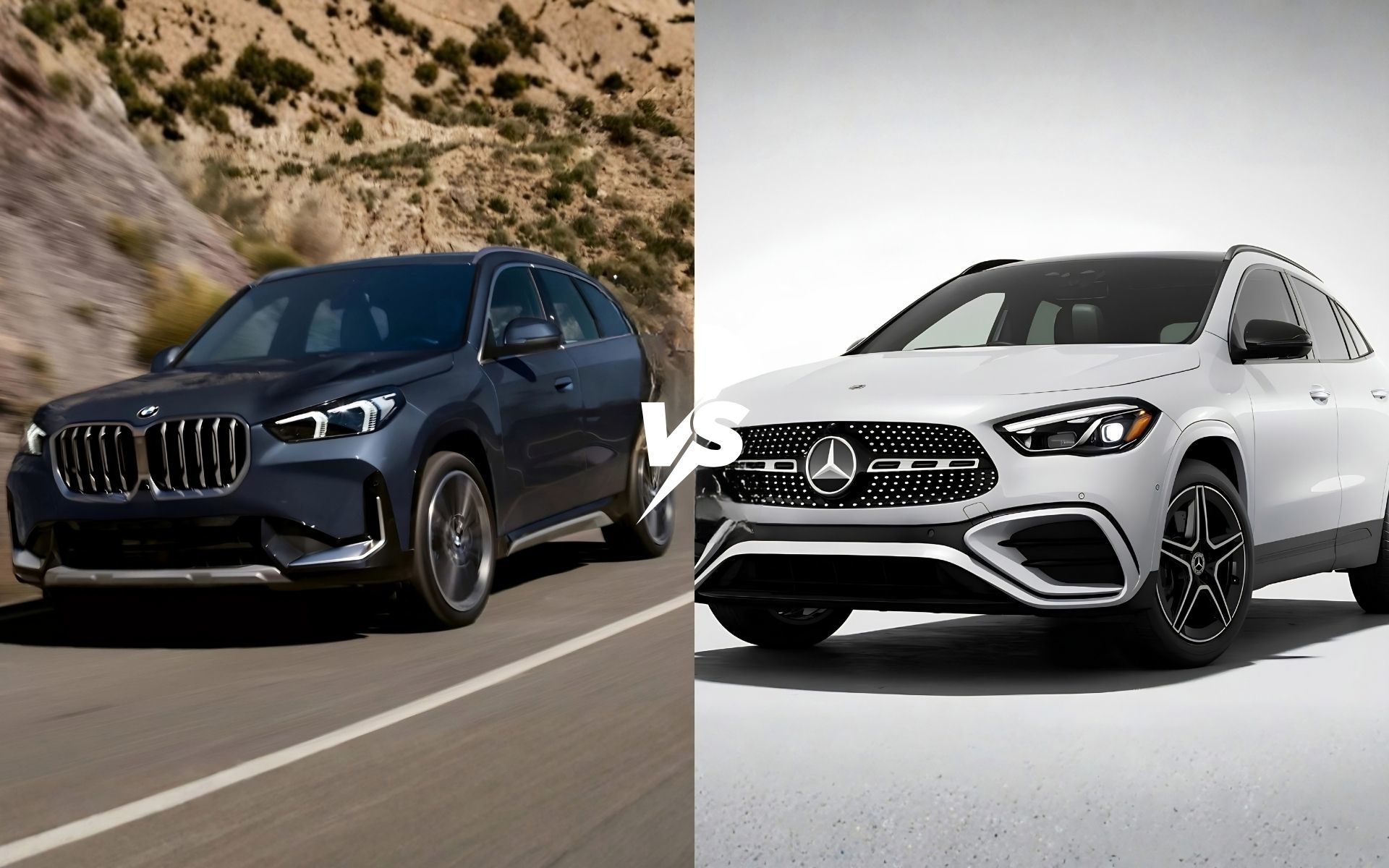
Choosing between two compact luxury SUVs is not simply about picking the vehicle with the more recognizable badge. For Saskatchewan drivers, everyday practicality matters just as much as performance and technology. Winter traction, fuel consumption, cargo space, cabin comfort and driver assistance can all affect how well an SUV fits your routine.
The 2026 BMW X1 and 2026 Mercedes-Benz GLA approach the segment with similar fundamentals: turbocharged four-cylinder engines, automatic transmissions, all-wheel drive and premium interiors. However, their strengths are not identical.
The BMW emphasizes responsive driving and practical cargo space, while the Mercedes-Benz combines compact dimensions with a technology-focused cabin and a mild-hybrid powertrain. Here is how the two compare for drivers in Regina and across Saskatchewan.
2026 BMW X1 vs Mercedes-Benz GLA: At a Glance
|
Feature |
2026 BMW X1 xDrive28i |
2026 Mercedes-Benz GLA 250 4MATIC |
|
Engine |
2.0-litre turbocharged four-cylinder |
2.0-litre turbocharged four-cylinder with mild hybrid |
|
Horsepower |
241 hp |
221 hp |
|
Torque |
295 lb-ft |
258 lb-ft |
|
Transmission |
7-speed automatic dual-clutch |
8-speed dual-clutch |
|
Drivetrain |
xDrive AWD |
4MATIC AWD |
|
0–100 km/h |
6.4 seconds |
6.8 seconds |
|
Fuel economy, city |
9.5 L/100 km |
9.4 L/100 km |
|
Fuel economy, highway |
6.9 L/100 km |
7.1 L/100 km |
|
Combined |
8.3 L/100 km |
8.4 L/100 km |
|
Cargo capacity |
540–1,600 L |
425–1,420 L |
|
Seating |
5 |
5 |
|
Fuel tank |
54 L |
51 L |
BMW's technical data confirms 241 hp, 295 lb-ft, standard xDrive, a 7-speed automatic transmission and a 6.4-second 0–100 km/h time for the X1 xDrive28i. Mercedes-Benz Canada lists 221 hp, 258 lb-ft, an 8-speed dual-clutch transmission, 4MATIC AWD and a 6.8-second 0–100 km/h time for the GLA 250.
The fuel figures above come from Natural Resources Canada's 2026 Fuel Consumption Guide, which lists 9.7/7.1/8.5 L/100 km for the X1 xDrive28i and 9.4/7.1/8.4 L/100 km for the GLA 250.
Performance: BMW Brings More Power
Both SUVs use 2.0-litre turbocharged four-cylinder engines, but the BMW produces more output in their standard configurations.
The X1 xDrive28i develops 241 horsepower and 295 lb-ft of torque. Its 6.4-second 0–100 km/h time gives it a small but measurable advantage over the GLA 250's 6.8 seconds.
What does that mean outside a specification sheet?
The additional torque can make the BMW feel more immediate when accelerating from a stop, joining a highway or passing slower traffic. That can be useful on Regina's major roads and during longer Saskatchewan highway trips.
The Mercedes-Benz isn't underpowered. Its 221-hp engine provides enough output for normal commuting and highway travel, while its mild-hybrid system is designed to support efficiency and smooth operation.
For shoppers who want substantially more performance, both manufacturers offer higher-performance versions. The X1 M35i xDrive produces 312 hp and reaches 100 km/h in 5.4 seconds, while the AMG GLA 35 4MATIC produces 302 hp and reaches 100 km/h in 5.2 seconds. These are performance-oriented alternatives rather than direct equivalents to the standard models.
AWD and Saskatchewan Winter Driving
For Regina drivers, all-wheel drive is an important part of this comparison.
BMW makes xDrive AWD standard on the Canadian X1. The system continuously manages power distribution between the front and rear wheels to help maintain traction.
The GLA 250 also comes standard with 4MATIC all-wheel drive. Mercedes-Benz additionally equips it with features such as DYNAMIC SELECT and an Off-Road Engineering Package.
Neither AWD system eliminates the need for proper winter tires. Tire selection remains especially important in Saskatchewan, where cold temperatures, packed snow and changing road conditions can all affect available grip.
For someone commuting through Regina during winter, the useful takeaway is straightforward: both models start with AWD, so the decision can focus more heavily on driving feel, cabin design, technology and practicality.
Fuel Economy: Nearly Even
Fuel consumption is one area where the two SUVs are closely matched.
NRCan rates the BMW at 9.5 L/100 km city, 6.9 L/100 km highway and 8.3 L/100 km combined. The Mercedes-Benz is rated at 9.4 L/100 km city, 7.1 L/100 km highway and 8.4 L/100 km combined.
That means there is no dramatic fuel-economy difference between the two on paper. The BMW has a slight combined-rating advantage, while the Mercedes-Benz has a marginal city advantage.
Real-world consumption will vary. NRCan notes that temperature, traffic, road conditions, driving style, accessories and AWD can all affect fuel consumption. That is particularly relevant in Saskatchewan, where winter temperatures can have a noticeable impact on everyday fuel use.
Interior and Cargo Space: A Meaningful BMW Advantage
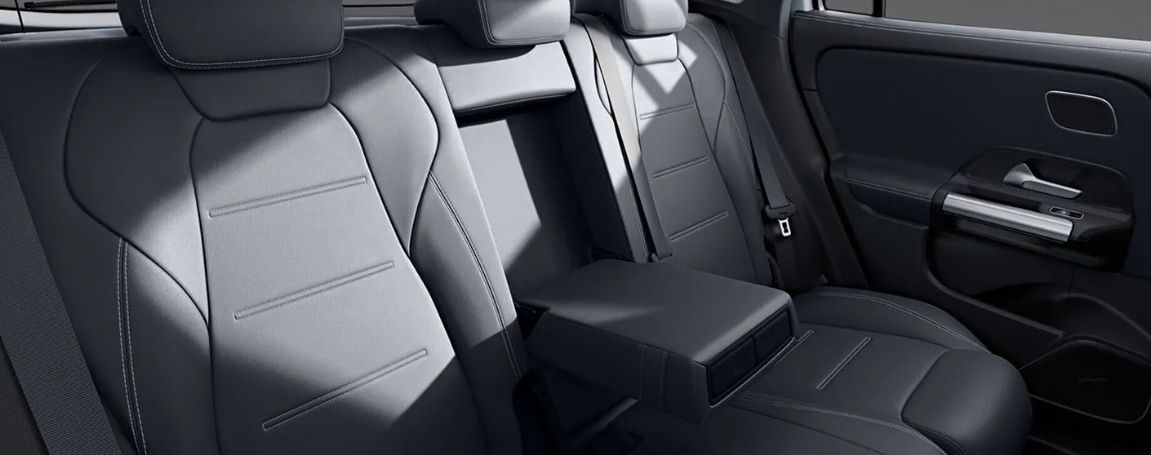
If you regularly carry groceries, sports equipment, luggage or work gear, cargo capacity deserves more attention than a flashy exterior feature.
The BMW provides 505 litres of cargo space behind the second row and up to 1,550 litres with the rear seats folded.
Mercedes-Benz lists 425 litres behind the rear seats and up to 1,420 litres with the seats folded for the GLA 250.
That gives the BMW a useful advantage for shoppers who frequently use their SUV as a practical daily hauler. The difference may not matter if your typical load is a couple of grocery bags and a backpack, but it becomes more noticeable for road trips or family use.
Both vehicles seat five people, so neither is designed to replace a larger three-row SUV. Their compact dimensions remain useful for city parking and everyday manoeuvring.
Technology: Two Different Takes on the Premium Cabin
The BMW uses a BMW Curved Display, with controls accessible through touch and voice interaction. Available technology includes features such as BMW Digital Key, Parking Assistant Plus and Driving Assistant Professional.
Driving Assistant Professional can assist with lane keeping and maintaining distance in applicable situations, while Parking Assistant Plus adds camera-based assistance for manoeuvring into tighter spaces. Equipment availability can vary according to configuration and packages.
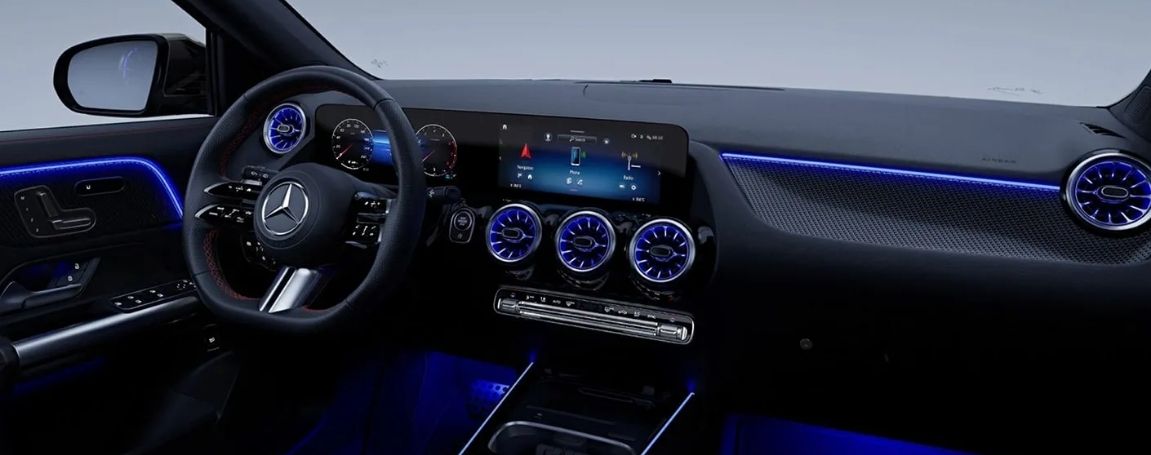
The GLA takes a similarly digital approach. Mercedes-Benz Canada's standard equipment includes dual 10.25-inch displays, MBUX, natural-language voice control, wireless Apple CarPlay, wireless Android Auto and wireless phone charging.
The Mercedes-Benz cabin therefore has a particularly strong technology focus, while the BMW combines its curved display with a driver-oriented layout and available advanced assistance features.
Safety and Driver Assistance
Both manufacturers provide substantial driver-assistance technology, although exact equipment can depend on trim and package selection.
BMW lists standard equipment such as Frontal Collision Warning with City Collision Mitigation, Lane Departure Warning, Active Blind Spot Detection, Rear Cross Traffic Alert and a rear-view camera for the X1.
The Mercedes-Benz GLA 250 includes Active Brake Assist, Blind Spot Assist, Active Parking Assist, Adaptive Highbeam Assist, Vehicle Exit Warning and a rearview camera, among other safety systems.
For everyday Regina driving, these systems can be particularly useful in situations such as busy intersections, parking lots and highway travel. They are designed to assist the driver rather than replace attentive driving.
Which SUV Makes More Sense for You?
There isn't one universal answer because the two vehicles emphasize slightly different priorities.
The BMW X1 xDrive28i may suit you if you prioritize:
- Stronger standard engine output
- Quicker standard acceleration
- More cargo capacity
- Standard xDrive AWD
- A sporty driving character
- A technology-rich BMW cabin
The Mercedes-Benz GLA 250 4MATIC may suit you if you prioritize:
- A compact exterior footprint
- MBUX technology and voice controls
- Dual 10.25-inch displays
- Standard mild-hybrid assistance
- Mercedes-Benz cabin design
- A wide range of available luxury and technology packages
The fuel-economy difference is small, so it should not be the only deciding factor. For many Regina shoppers, cargo requirements, winter driving needs, preferred cabin technology and driving character will be more noticeable in daily use.
2026 BMW X1 vs 2026 Mercedes-Benz GLA: The Regina Perspective
For drivers shopping in Regina, both compact luxury SUVs make sense for different reasons. Their standard AWD configurations are well suited to a market where winter road conditions are part of normal ownership, while their compact dimensions make them practical for urban driving.
The BMW's higher output and larger cargo area give it a strong practical-performance combination. The Mercedes-Benz counters with its mild-hybrid powertrain and technology-focused cabin.
The best way to separate the two is to consider how you actually use your vehicle. If highway acceleration, cargo flexibility and BMW's driving-focused approach are high on your list, the X1 deserves close attention. If MBUX, Mercedes-Benz styling and a highly digital cabin are more important, the GLA may align more closely with your priorities.
If you're comparing the 2026 BMW X1 vs. 2026 Mercedes-Benz GLA in person, BMW Regina can help you explore the X1's available configurations, features and financing options and arrange a closer look at the vehicle.